
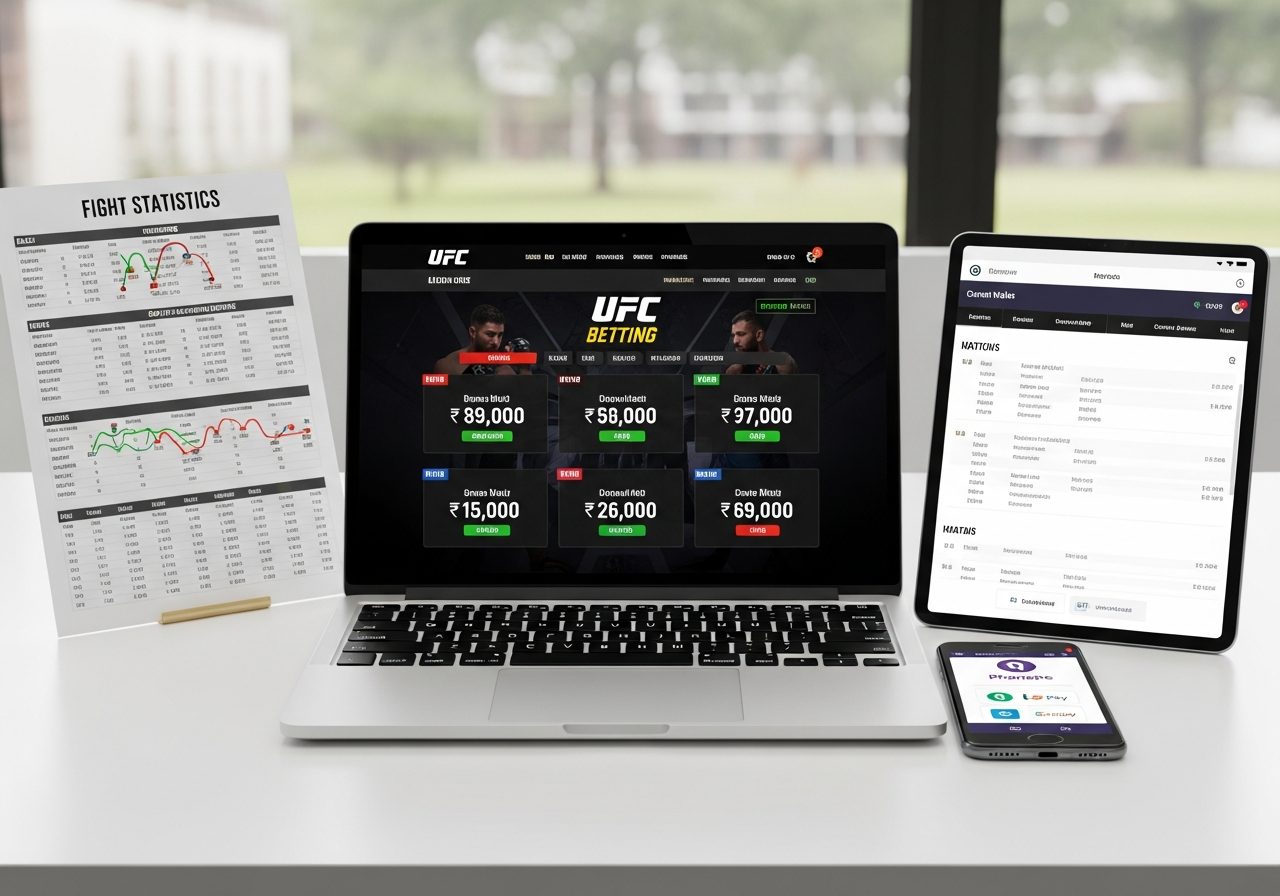
The UFC and mixed martial arts have exploded in popularity across India over the past five years. What was once a niche sport is now a mainstream phenomenon, with millions of Indian fans tuning in to watch title fights, rising contenders, and thrilling undercards. As the sport has grown, so has interest in betting on MMA events—and offshore betting sites have taken notice, increasingly tailoring their platforms to accept Indian players.
However, betting on UFC from India exists in a legal grey area that differs significantly from traditional sports betting in many Western countries. This guide walks you through the practical, legal, and strategic landscape of UFC betting for Indian residents. We’ll cover the current regulatory environment, how to select and set up accounts on safe offshore sites, deposit and withdrawal methods optimized for India, a deep dive into bet types and odds, and most importantly, how to analyze fights like a professional and manage your bankroll responsibly. This is educational content, not legal or financial advice—we strongly encourage you to check your local state regulations and consult with legal counsel if uncertain about your jurisdiction’s stance on online betting.
Is It Legal to Bet on UFC and MMA From India?
There is no specific federal law in India that explicitly prohibits betting on UFC or MMA fights online. However, gambling law in India is primarily a state subject, and most existing legislation predates the modern online betting era. This creates a legal grey area where millions of Indian residents bet via offshore platforms—often without facing direct legal consequences—while the regulatory status remains ambiguous and potentially subject to change.
| Aspect | National Position | State Variations | What This Means for UFC/MMA Bettors |
|---|---|---|---|
| Public Gambling Act, 1867 | Federal framework; does not explicitly ban online betting or sports wagering | States interpret and enforce differently; some have passed new restrictions on online betting | Offshore sportsbooks operate outside direct Indian regulation; risk profile varies by state |
| IT Act, 2000 | Addresses cybercrime but not sports betting specifically | Some states cite IT Act in enforcement; others use it to monitor illegal operators | Legal uncertainty; your betting may not be explicitly illegal but lacks statutory protection |
| State-Level Bans | No uniform ban across all states | Goa, Sikkim, Nagaland allow licensed gambling; many others impose strict restrictions or bans | Your state of residence is the key factor; permissive vs restrictive jurisdiction changes risk exposure |
| Skill vs Chance Debate | No settled consensus at federal level; courts have called sports betting a skill-based activity | Some state courts recognize skill element; others treat all betting as gambling | MMA betting may be legally defensible as prediction skill, but not guaranteed |
| Offshore Sites and KYC | No law requires Indian residents to use only Indian-licensed operators | Most states don’t explicitly criminalise using foreign sportsbooks; enforcement focuses on operators | Millions of Indians use offshore sites; risk is lower for bettors than for unregistered domestic operators |
| Tax Implications | Income from gambling is taxable under Indian income tax law | States have different tax withholding and reporting rules for winnings | Large winnings may be flagged by betting sites’ KYC processes; maintain records for tax filing |
Central vs State Laws and the Online Betting Grey Area
India’s gambling regulation operates primarily at the state level, meaning your location determines which rules apply to you. The central Public Gambling Act of 1867 prohibits operating gambling establishments but does not explicitly address online betting. The Information Technology Act, 2000, governs cybercrime but is not designed to regulate sports betting. This legislative gap means that online betting platforms targeting Indian players operate in a space where laws are unclear rather than clearly illegal.
Most states have not passed new legislation specifically regulating or prohibiting online betting, which creates the “grey area” that allows offshore sportsbooks to advertise and accept Indian players. However, several states are beginning to move toward tighter controls. Some have imposed explicit bans on online betting; others have proposed regulations. The legal environment is evolving, and it is essential to stay informed about changes in your state. Using a licensed, reputable offshore sportsbook significantly reduces your personal legal risk compared to using unregistered domestic operators or unlicensed agents.
Key Indian States and Their Approach to Sports Betting
Several states in India take a more permissive stance on gaming and betting. Sikkim, for example, has a history of regulating and licensing online gaming platforms, including sports betting. Goa and Nagaland have similarly allowed licensed gaming operators to function. These states may offer a lower-risk environment for residents, though the sport-specific licensing landscape is still developing. Conversely, states like Tamil Nadu, Gujarat, and others have stricter interpretations of anti-gambling law, and residents there face a higher perceived legal risk. That said, enforcement against individual bettors remains uncommon; authorities typically target illegal operators.
As the online betting market in India grows, expect additional states to propose new regulations. Some may create licensed frameworks for sports betting (similar to the UK or Australia), while others may impose tighter bans. Your best protection is staying informed about your state’s rules and using only licensed, reputable offshore sportsbooks that implement strong KYC and responsible gambling measures. While future regulation could restrict access to offshore sites, the current practical reality is that millions of Indian UFC fans use offshore platforms without legal incident.
Choosing Safe UFC and MMA Betting Sites in India
Selecting a trustworthy UFC betting platform is the foundation of a safe, enjoyable betting experience. Many offshore sportsbooks accept Indian players, but not all are equally reliable, regulated, or user-friendly. The best sites for Indian UFC bettors combine proper offshore licensing, strong reputation among Indian communities, deep UFC and MMA markets, competitive odds, INR support, and reliable UPI or wallet-based withdrawals.
- Valid offshore licensing – Look for sites licensed in Malta, Curacao, Isle of Man, or similar jurisdictions that are recognized for their regulatory standards. Check the footer of the site for the license number and issuing authority; verify it with the licensing body if possible.
- Proven track record with Indian players – Search for reviews and discussions on Indian betting forums and community pages. Look for consistent feedback on deposit speed, withdrawal reliability, customer support responsiveness, and dispute resolution.
- Full UFC and MMA coverage – The best sites offer not only UFC events but also other major promotions (Bellator, ONE Championship, Rizin) and a wide range of markets. Limited-market sites (e.g., only offering moneyline and basic totals on UFC fights) signal lower quality.
- Competitive odds and multiple bet types – Compare odds across a few sites for the same fight. Odds can vary by 0.05 to 0.10 in decimal format; over time, this compounds. Choose sites offering moneyline, three-way markets, method of victory, round betting, parlays, and props for flexibility.
- Native INR support and UPI/wallet integration – Sites that accept UPI, PhonePe, GPay, and Paytm directly (or via wallet partners) are more convenient for Indian bettors. Avoid sites that only accept cryptocurrency or international bank transfers, which add friction and fees.
- Fast, reliable withdrawals – Read recent reviews about withdrawal turnaround times. Aim for sites promising 24–48 hour processing for UPI transfers. Avoid sites with excessive withdrawal terms, hidden fees, or patterns of delayed payouts.
- Red flags to avoid – Steer clear of sites with no clear license information, those refusing KYC, sites offering unrealistic bonuses (e.g., 500% cashback), those with minimal or outdated UFC markets, or those with poor customer support reviews.
Licensing, Reputation, and Safety Checks
Licensing is your primary defense against fraud and unfair practices. Reputable offshore sportsbooks are licensed by established gaming authorities like the Malta Gaming Authority, Curacao’s Gaming Control Board, or the Isle of Man Gambling Supervision Commission. These jurisdictions require operators to maintain financial reserves, conduct regular audits, and implement responsible gambling tools. Before depositing, visit the site’s footer, find the license number, and verify it on the issuer’s official website.
Reputation matters equally. Indian betting communities on Reddit, Telegram, and dedicated forums discuss site performance regularly. Pay attention to patterns: if a site consistently has negative reviews about withdrawals or disappears after major upsets, it is a warning sign. Look for sites with an active Indian customer support team (chat, email, or phone in Hindi or English), clear and fair terms and conditions, transparent wagering requirements, and visible responsible gambling resources (deposit limits, self-exclusion, helpline links). An SSL certificate (look for the padlock icon in your browser) is standard; sites without it should be avoided. Lastly, full MMA coverage—including not just UFC but Bellator, ONE Championship, and Rizin—suggests a serious commitment to the sport and a larger, more stable operator.
How to Open and Verify Your Betting Account From India
Setting up a betting account is straightforward, but the verification process requires attention to detail. Most offshore sportsbooks have simplified registration for Indian players, though the KYC (Know Your Customer) verification can take longer. Follow these steps to ensure a smooth experience and avoid account freezes or withdrawal delays.
- Visit the site and click “Register” or “Sign Up”. Choose your preferred language (often English or Hindi is available). Provide a valid email address and create a strong password (mix of uppercase, lowercase, numbers, symbols).
- Select INR as your currency during registration. This ensures all transactions are in Indian Rupees, avoiding currency conversion fees and making tracking simpler.
- Complete the basic registration form with your full name (as it appears on ID), date of birth, phone number, and country/state of residence. Be accurate; mismatches will cause KYC rejection later.
- Choose and apply a welcome bonus if desired. Read the terms carefully: note the minimum deposit amount, maximum bonus, wagering requirement (e.g., 5x or 10x), minimum odds for bonus-eligible bets, and time limit to complete the bonus. Some bonuses lock your funds until requirements are met, so choose only if you plan to actively bet.
- Make your first deposit using your preferred payment method (UPI, wallet, or net banking). Most sites credit deposits instantly. The bonus, if applicable, is usually awarded automatically or via a code.
- Upload KYC documents via the account dashboard. You will typically need:
- Government-issued ID (Aadhaar, PAN, passport, or driver’s license)
- Proof of address (utility bill, bank statement, or Aadhaar)
- Sometimes, a selfie holding your ID
- For large volumes, proof of funds (bank statement or salary slip)
- Await verification. Most sites complete KYC within 24–72 hours. Withdrawals are often blocked until verification is complete. Check your email for approval or requests for additional documents.
KYC Requirements and How to Pass Verification Smoothly
KYC requirements exist to prevent money laundering and confirm you are of legal age (18+ in India). Offshore sportsbooks are required by their licenses to implement strict AML (Anti-Money Laundering) controls, so this is a non-negotiable step.
Common documents accepted include government-issued photo ID (Aadhaar is quickest and most widely accepted), PAN card, passport, or driver’s license. For proof of address, any recent utility bill, broadband bill, bank statement, or insurance policy with your name and full address works. Selfies holding your ID help confirm identity and prevent account takeovers.
To avoid rejection, ensure your details match exactly across all documents: name spelling, address, and date of birth. Take clear photos in good lighting, with all four corners of the document visible and no glare. Do not edit or crop photos; sites flag manipulated documents. Use the exact name registered on the betting site when submitting documents. If your registered name differs from an official document (e.g., nickname vs legal name), update your site profile first. Finally, be patient: the 24–72 hour window is standard, and rushing or re-uploading documents repeatedly can actually slow the process.
Avoiding Common Account and Bonus Mistakes
Never register with fake or incomplete data. If KYC fails, your account may be suspended or funds forfeited. Similarly, avoid using a VPN to mask your location unless the site explicitly permits it; many T&Cs prohibit geo-spoofing, and doing so can lead to account termination and funds confiscation.
Bonus abuse—such as claiming multiple bonuses, betting maximum odds to avoid rollover, or depositing and withdrawing without playing—may trigger fraud alerts. Stick to the stated bonus T&Cs. Wagering requirements (e.g., “must wager bonus 5x at odds 1.50+”) must be completed on eligible bets before withdrawing bonus funds. Missing the time limit forfeits the bonus. Always read bonus terms before applying; if they seem unfair or unclear, skip the bonus and deposit without it. This keeps your funds accessible and avoids accidental account locks.
Deposits and Withdrawals: UPI, Wallets, and INR Banking
Payment methods are crucial for smooth UFC betting from India. Offshore sportsbooks used by Indian bettors support a variety of India-friendly payment options, each with pros and cons regarding speed, fees, and reliability.
| Payment Method | Supported For Indians? | Speed (Deposit/Withdrawal) | Fees and Limits | Best Use Case for UFC Betting |
|---|---|---|---|---|
| UPI (Google Pay, PhonePe, BHIM) | Yes, widely supported | Instant deposit / 2–24h withdrawal | No fees; limits vary by bank (typically ₹1L–5L per transaction) | Ideal for frequent small to medium bets; fastest method for most bettors |
| PhonePe/GPay Direct | Yes, on select sites | Instant to 2h | No fee; aggregated limits per day/month | Best for bettors who already use these wallets; convenient for quick deposits |
| Paytm/Airtel Money | Yes, through partner integrations | 1–2h deposit / 4–24h withdrawal | Small fee (1–2%) or none, depending on site; ₹50K–₁L per transaction typical | Good alternative if UPI is unavailable; slightly slower than native UPI |
| Net Banking (ICICI, HDFC, Axis, etc.) | Yes | Immediate deposit / 1–3 days withdrawal | No deposit fee; withdrawal may have 1–2% fee; ₹5L+ per transaction possible | Suitable for large deposits; slower but reliable; good for long-term bettors |
| Credit/Debit Cards (Visa, Mastercard) | Yes, though some banks block international gambling | 1–2h deposit / 3–5 days withdrawal | 2–3% fee; limits vary by issuer | Backup option; some banks refuse gambling charges; not recommended as primary method |
| Cryptocurrency | Yes, on some sites (Bitcoin, USDT, etc.) | Instant to 30 min | Variable; no direct fee, but volatility and conversion costs apply | Suitable only if you’re already familiar with crypto; adds complexity; not essential |
Managing Your Bankroll With Indian Payment Options
Effective bankroll management starts with treating your betting funds as completely separate from your daily expenses. Open a dedicated UPI wallet, savings account, or digital account just for UFC betting. This prevents accidentally mixing betting deposits with household money and makes tracking income and losses straightforward for tax purposes.
In INR terms, define your total bankroll—the amount you can afford to lose without affecting your living situation. A common recommendation for Indian bettors is ₹10,000 to ₹50,000 as a starting bankroll, depending on your disposable income. Avoid depositing large sums; instead, start with ₹2,000–₹5,000 to test the platform’s withdrawal process and your own discipline. Many Indian bettors make the mistake of depositing via UPI because it’s frictionless, then overcommitting to large bets because funds feel “easy to add.” Treat each rupee as real money. Set a per-bet unit size (e.g., 1–2% of your bankroll per wager), and stick to it even after a win. Finally, be aware that large withdrawals or frequent international transfers may trigger scrutiny from your bank; start small, maintain clear transaction records, and be transparent if asked about the source of funds.
Core UFC and MMA Bet Types Explained
UFC betting offers far more than just picking who wins. Offshore sportsbooks used by Indian bettors provide a wide range of markets, from simple moneyline bets to complex same-fight parlays. Understanding each bet type, its risk-reward profile, and when to use it is essential for long-term success.
| Bet Type | What You Predict | Typical Odds Profile | Risk Level | Example in a UFC Fight |
|---|---|---|---|---|
| Moneyline (Match Winner) | Fighter A or B wins the fight | Favorite: -200 to -500; Underdog: +150 to +400 | Low | Backing Islam Makhachev at -300 to win against Sean Brady |
| Three-Way Moneyline | Fighter A wins, B wins, or draw | Favorite: -350; Underdog: +250; Draw: +800 | Low–Medium | Selecting between fighter A, fighter B, or draw in a title fight |
| Method of Victory | Winner decided by KO/TKO, Submission, or Decision | KO/TKO: +200 to +500; Decision: -150 to -300; Sub: +300 to +800 | Medium | Betting that a wrestling-heavy fight ends in a decision |
| Round Betting | Fight ends in Round 1, 2, 3, 4, or 5 | Early rounds (1–2): +300 to +800; Late rounds (4–5): +150 to +400 | Medium–High | Predicting a quick KO in Round 1 at +500 odds |
| Over/Under Rounds | Fight goes over or under 2.5 or 4.5 rounds | O/U 2.5: typically -110 both sides; O/U 4.5: similar | Low–Medium | Betting “Over 2.5 Rounds” in a striker vs striker matchup |
| Will Fight Go the Distance | Yes (both fighters complete 3 or 5 rounds) or No (fight ends early) | Yes: -200 to -300; No: +150 to +250 | Low–Medium | Backing a durable heavyweight to “go the distance” vs a knockout artist |
| Exact Result (Winner + Method + Round) | Specific fighter wins by specific method in specific round range | Round 1 KO: +700 to +2000; Late-round decision: +150 to +300 | High | Betting “Fighter A wins by submission, Rounds 2–3” at +400 |
| Same-Fight Parlay | Combining multiple props from one fight | Two props: odds multiply; three props: odds compound significantly | High | “Fighter A wins + Over 2.5 Rounds + KO/TKO method” |
| Parlays (Multi-Fight) | Correctly predict outcomes across multiple fights on one card | Example: 3-fight parlay at -110 each = ~6.5:1 payout | Very High | Stacking moneyline picks across three UFC fights on one card |
| Futures | Outcome decided over an event or period | Title odds: +200 to +600; long-term futures: +300 to +1000 | Medium–High | Betting that a rising prospect wins a title within 12 months |
| Fighter Props | Specific stats (knockdowns, takedowns, significant strikes) | Variable; depends on prop type and oddsmaker | Medium | “Fighter lands 10+ significant strikes in Round 1” |
Moneyline, Totals, and Go-the-Distance Markets
The moneyline is the simplest and most widely offered UFC bet. You pick the winner; odds reflect how favored or underdog they are. Favorites are displayed with a minus sign (e.g., -200), meaning you must wager ₹200 to win ₹100. Underdogs have a plus sign (e.g., +150), meaning a ₹100 bet wins ₹150. The three-way moneyline adds a draw option, common in UFC since judges can score bouts even.
Over/Under rounds markets are equally straightforward. The sportsbook sets a line—typically 2.5 rounds for three-round fights and 4.5 rounds for five-round title fights. You bet whether the fight ends (Under) or goes at least that number of rounds (Over). A fighter finishing in Round 2 counts as Under 2.5; if it goes to Round 3 or beyond, it’s Over 2.5. These markets are especially useful when you’re confident about fight pace or durability but unsure of the winner.
Go-the-distance bets ask: will both fighters complete the scheduled rounds without a finish? This is valuable when predicting outcomes involving durable fighters or defensive matchups. For example, if you think a wrestler will win by decision but aren’t certain he’ll finish his aggressive opponent, backing “goes the distance” + your fighter’s method of victory combo can offer better cumulative odds than a single bet.
Props, Parlays, and Futures for UFC Events
Method-of-victory markets let you predict how the winner prevails: KO/TKO, submission, or decision. These offer higher odds than moneyline but require more fight-specific analysis. Round betting goes further: you specify not just the method but also the round range (Round 1, Rounds 2–3, Round 4+). Exact combinations like “Fighter A wins by submission in Round 2” pay big (+500 to +2000), but hitting them consistently is difficult.
Parlays multiply odds by combining multiple selections into one bet. A two-fight parlay might combine two moneyline picks; if both hit, the odds multiply (e.g., -110 and -110 = approximately 2.64:1). Parlays are seductive because small stakes yield large payouts, but they are riskier: even one loss loses the entire bet. Use parlays sparingly—only when you have high confidence in multiple fights and are betting a small percentage of your bankroll.
Futures are longer-term bets: who will win a title within 12 months, which fighter will have the most wins in a calendar year, etc. These offer odds locked in when you place the bet, so early plays on rising prospects can pay off handsomely if they break through. Avoid futures as a primary betting strategy; use them to diversify a portfolio if you’ve done deep research on a fighter’s trajectory.
How UFC Odds Work and How to Read Them
UFC odds appear in three formats: American (e.g., -150, +200), decimal (e.g., 1.67, 2.50), and fractional (e.g., 2/3, 6/4). Most offshore sportsbooks used by Indian bettors default to decimal odds, which are simpler: a ₹100 bet at 1.50 decimal odds returns ₹150 total (₹50 profit plus your ₹100 stake). American odds are common on international sites; learning to convert them is essential.
- American to Decimal Conversion: For negative odds (favorites), divide 100 by the absolute odds and add 1. Example: -200 = (100/200) + 1 = 1.50. For positive odds (underdogs), divide the odds by 100 and add 1. Example: +200 = (200/100) + 1 = 3.00.
- Implied Probability: Take 1 and divide by decimal odds. Example: 1.50 odds = 1 ÷ 1.50 = 0.667 = 66.7% implied probability. This is what the sportsbook’s odds imply is the chance of that outcome. If your research suggests the true probability is higher (e.g., 75%), the odds represent value.
- Vig (Juice): Sportsbooks profit by setting odds such that the implied probabilities of all outcomes slightly exceed 100%. On a moneyline, both sides at -110 (approx. 1.909 decimal) imply 104% total probability. This 4% margin is the vig. Lower vig (closer to -105 or -107) is better for bettors.
- Shopping for Lines: Different sites set slightly different odds. A favorite at 1.85 on one site vs 1.90 on another might seem minor, but over many bets it compounds. Always compare odds across 2–3 trusted sites before placing large bets on major UFC cards.
- Line Movement: Follow odds as they change from opening to fight time. Sharp bettors (professional/experienced bettors) cause early line movement; closing line movement often reflects public betting or injury news. Betting against late-movement decisions of public money can sometimes offer edge.
Implied Probability and Finding Value in UFC Lines
Value is the cornerstone of long-term betting success. A bet has positive expected value (EV) when the implied probability from the odds is lower than your estimated true probability of that outcome. Here’s a practical example: if you think Fighter A has a 60% chance to win, but the moneyline odds (1.70 decimal) imply only 58.8%, that’s a small edge. Over hundreds of similar bets, small edges compound into profit.
To calculate expected value in decimal format: (Your Estimated Probability × Decimal Odds) – 1. Using the example above: (0.60 × 1.70) – 1 = 0.02 = +2% EV. That’s positive but tiny; you’d want to find bets with 5–10%+ EV. The converse is also important: never bet on a bet with -EV, no matter how confident you feel. This is how casual bettors leak money to sportsbooks. Commit to only placing bets where you genuinely believe the odds underestimate the true probability, and track your projections against closing odds over time to see if your analysis is improving.
Analyzing UFC and MMA Fights Like a Sharp
Winning UFC bettors go beyond hype and fandom. They break down fighter styles, physical attributes, fight-specific situations, and historical tendencies. This section translates professional MMA analysis into frameworks you can apply to your own research.
- Striking vs Wrestling vs Submission: Fighter styles create natural matchups. A high-volume striker may outpace a takedown-focused wrestler on the feet, but if the wrestler gets a fight to the ground, he controls the pace. A submission specialist threatens the wrestler if caught in transition. Identify each fighter’s primary skill and secondary strengths.
- Stance and Reach: Orthodox fighters (dominant right hand) vs southpaws (dominant left hand) create matchup advantages. A striker’s reach and distance management affect striking exchanges. A wrestler’s height and leg length influence takedown difficulty.
- Cardio and Pace: Some fighters excel in Round 1 but fade; others come alive in Rounds 4–5. Analyze fight footage to assess stamina decay. Matches between two high-pace fighters often benefit the better-conditioned athlete by late rounds.
- Age and Experience Curve: Fighters in their athletic peak (usually 28–34) perform better than younger or aging counterparts, all else equal. However, technical skill and fight IQ can compensate.
- Weight-Cut History and True Weight Class: A fighter’s true weight class (natural size and strength) often differs from their official division. Extreme weight cuts can impair performance and recovery. Research whether a fighter typically weighs significantly less at weigh-ins, suggesting aggressive cutting.
- Injury and Layoff: Fighters returning from injury or long layoffs (6+ months) sometimes underperform. Short-notice replacements (less than two weeks’ notice) are also higher variance.
- Camp and Coach: Top coaching camps (e.g., highly regarded wrestling or striking camps) correlate with preparation quality. Changes in coaching or gym affiliation sometimes signal improvement or decline.
- Judging Tendencies: Different judges and regions favor different styles. American judges often favor control and striking; other regions may weight grappling more. In close fights, understand what judges reward locally.
Key Fighter Metrics and Styles That Impact Bets
Study specific statistics when comparing fighters. Striking accuracy (significant strikes landed per minute), takedown success (percentage of attempted takedowns that land), takedown defense (percentage of opponent takedowns defended), and submission rate (percentage of wins by submission) all reveal strengths. A fighter with 45% takedown success and 80% takedown defense faces an uphill task against a wrestling-heavy opponent, even if he has a striking edge.
Durability and finishing rates matter for KO/submission bets and round totals. A fighter with a 70% finish rate likely doesn’t go the distance; betting “Under 2.5 Rounds” on his fights is sensible. Conversely, a defensive fighter with a 20% finish rate and 50% decision win rate will rarely deliver early drama; lean toward “Over” bets and decisions when he fights.
Round-by-round pacing is crucial for round betting. Watch 1–2 key fights from each fighter to see if early action is explosive or patient. Some fighters come to war immediately (good for Round 1 bets); others study early and increase output in Rounds 2–3. Record these observations in your analysis.
Using UFC Stats and Tape to Build Your Own Edge
Develop a simple research routine before every UFC bet. Start by collecting stats from official UFC records or reputable MMA stats sites (don’t rely on social media or YouTube breakdowns alone). Compare striking rates, takedown stats, and other metrics side by side. Then, watch 1–2 full fights from each competitor—not highlight reels, but full bouts where they faced relevant opponents. Pay attention to how they respond to adversity, their pace early vs late, and how they handle their opponent’s primary weapons.
Next, map each side’s path to victory. How does Fighter A beat Fighter B? Does A need to stay on the feet, or can he win if it goes to the ground? How does B’s gameplan counter A’s strengths? Once you’ve answered these, estimate probabilities for each outcome (moneyline, method, round distribution). For example, you might estimate 55% moneyline for Fighter A, 35% for B, 10% draw; within A’s wins, maybe 40% KO/TKO, 30% decision, 30% submission. Then price the fight and compare to the sportsbook’s odds.
Finally, track your projections vs closing odds in a simple log. Over time, you’ll identify patterns: maybe you’re overrating strikers, or underestimating wrestlers. This feedback loop is how sharp bettors build edge. Discipline matters more than perfection; stick to bets with 5%+ EV, ignore the rest, and let variance play out.
Live Betting on UFC Fights From India
Live betting—placing wagers during the fight—creates opportunities to exploit rapidly changing odds. As rounds progress, momentum shifts, and damage accumulates, the sportsbook adjusts odds in real time. For Indian UFC bettors, live betting offers both edge and peril.
| Live Betting Angle | Potential Edge for Bettors | Key Risks | Example Scenario |
|---|---|---|---|
| Fading Early Adrenaline | Opening round sees wild exchanges; oddsmakers sometimes overreact to early activity; backing underdogs after they survive aggressive R1 | Latency; fight can end suddenly; emotional overreaction to minor events | Round 1 ends with both fighters trading; underdog is still fresh but odds shorten; back underdog R2 decision at better odds |
| Backing Durability Underdogs | Favorite dominates Round 1; underdog is tough and improving; odds increase as favorite’s likelihood of finishing decreases | Catching the odds at right moment is difficult; one lucky punch changes everything; favorites do finish underdogs | Fighter B is down after R1; looks hurt but doesn’t quit; in R2, odds for his comeback improve dramatically |
| Live Method Hedges | Locked in pre-fight moneyline bet; live betting KO/sub method in opposite direction hedges loss risk if fight changes unexpectedly | Tie up capital in two contradictory bets; requires fast decisions; defeats the purpose if you’re unsure | Bet Fighter A win pre-fight; live bet Fighter B KO to hedge if A looks compromised |
| Catching Injury-Related Swings | Fighter visibly injured (bad cut, clear limp, compromised breathing); odds overreact; sharp bettors fade the injury impact | Refs stop fights suddenly; injury may worsen suddenly; emotional response to visible damage misleads | Fighter limps on R3 but it’s just conditioning; odds favor opponent; research shows similar gait before and opponent hasn’t capitalized |
| Round-Specific Plays | If the fight is close, specific round outcomes (Round 4 decision, Round 5 KO) offer better odds as a live bet than pre-fight | Requires real-time attention; risky if stream lags; must have pre-planned trigger and max exposure | Up 2 rounds, underdog backs up in R4; rounds are close; back favorite in R4 at boosted odds to secure safer outcome |
Live odds move fast, and decision-making is quick. In India, stream latency (often 30–60 seconds behind the live broadcast) is a real disadvantage; you may think you’re betting on the current state of the fight when the action is already a minute ahead. Mobile data speeds also matter; if you’re on 4G with occasional drops, live betting is riskier than disciplined pre-fight selection.
When Live Betting Makes Sense – and When to Avoid It
Live betting makes sense only if you’ve thoroughly analyzed the fight beforehand and have a specific, pre-planned trigger for placing a live bet. For example: “If Fighter A exhausts himself in R1 and Round 1 doesn’t go the distance, I’ll live bet Fighter B at shorter odds.” Write this down before the fight; don’t improvise live. Watch body language, cardio, and cumulative damage—not commentary, not social media, not the crowd’s energy. Professional commentary often lags your stream and can mislead you.
Avoid live betting if you’re unfamiliar with the fighters, if you’re emotionally reactive after a close decision, or if you’re chasing losses from earlier in the card. Live betting can accelerate losses because decisions are made in seconds with high emotional stakes. Set a pre-fight maximum exposure for live wagers (e.g., only 10% of your bankroll on live bets for a single card) and commit to it regardless of how a fight unfolds. Live betting is a supplement to thoughtful pre-fight analysis, not a replacement for it.
Bankroll Management and Risk Control for Indian UFC Bettors
Your bankroll is your most valuable asset in UFC betting. Professional bettors treat it with extreme discipline, never risking more than they can afford to lose and structuring bets to survive inevitable losing streaks.
- Define your bankroll in INR terms. How much can you afford to lose without affecting your life? For many Indian bettors, ₹10,000–₹50,000 is reasonable; adjust to your income. Treat this as a sunk cost; you’re investing it in entertainment and learning, not expecting a return.
- Set your unit size at 1–2% of bankroll. If your bankroll is ₹20,000, your unit is ₹200–₹400. Never bet more than one unit on a single fight unless you have exceptional edge and have sized down on other fights that night. This ensures even a bad streak doesn’t wipe you out.
- Avoid all-in bets, regardless of confidence. Even bets you are 90% sure about have a 10% chance to lose. Over 10 such bets, one will lose; if you’ve bet everything on one, you lose everything. Discipline matters more than optimism.
- Account for MMA variance. Upsets are more common in MMA than in other sports due to the small gloves, variety of skill, and single-elimination format. Judges’ scorecards also introduce randomness. Expect a 45–55% win rate on your best bets; this is normal variance, not a sign your system is broken.
- Separate betting funds from daily expenses. Use a dedicated account or wallet. Once you withdraw winnings, treat them as real money outside your betting bankroll. Don’t redeposit winnings unless you’ve proven your strategy over 50+ bets.
- Never chase losses. After a losing week, resist the urge to place larger bets to “win it back.” This is how bankrolls vanish. Stick to your unit size and trust your process.
- Take periodic profit. If you build your bankroll from ₹20,000 to ₹30,000, withdraw ₹5,000 as profit and reset your working bankroll to ₹25,000. This locks in gains and reduces the psychological pressure of volatility.
Setting Limits and Recognizing Problem Gambling Signs
Most offshore sportsbooks offer built-in responsible gambling tools. Use them: deposit limits (cap your weekly deposit at ₹5,000), loss limits (automatically block betting if losses exceed ₹10,000 in a week), time-outs (pause your account for 24 hours), and self-exclusion (suspend your account for months or years). These tools are free and require only a few clicks; using them is a sign of maturity, not weakness.
Watch for warning signs of problem gambling: betting with borrowed money or credit, hiding your betting activity from family, viewing betting as a way to earn money rather than entertainment, betting more than your bankroll allows to “chase” losses, or neglecting responsibilities (work, family) to place bets or watch fights. If you recognize any of these, use self-exclusion immediately and contact a helpline like the Indian Gambling Helpline (if available in your state) or seek support from a counselor. Betting should be fun; if it’s causing stress or financial harm, it’s a problem.
Structuring Your UFC Betting Portfolio Across Events
Each UFC card presents multiple fight opportunities, but overexposure is a trap. Cap your risk per event at 5–10% of your total bankroll, regardless of how many good bets you identify. If you have 20 ideas for a UFC card but only 5 have real edge (based on your research), place only those 5. Diversification across many mediocre bets is worse than discipline around fewer high-quality wagers.
Maintain a bet log in a spreadsheet: fight, fighter, bet type, stake, odds taken, closing odds, result, and notes. Over 50–100 bets, you’ll see patterns: which fight types you analyze best, which markets you consistently get wrong, and how your early-card edges compare to late-card bets. This feedback is invaluable for improving. Most Indian UFC bettors skip the log, which is why they can’t identify leaks in their strategy. A simple log takes 2 minutes per bet and pays dividends.
India-Specific Tips and Common Mistakes in UFC Betting
Indian UFC bettors face unique pitfalls that differ from bettors in other countries. Awareness of these mistakes can save you thousands of rupees.
| Common Mistake | Why It Hurts Indian Bettors | Better Alternative | Practical Example |
|---|---|---|---|
| Blindly following tipsters and influencer codes | “Expert” tipsters rarely have edge; many are paid promotions; codes often lock bonuses with harsh T&Cs | Do your own research; use tipsters only for factual fight information (stats, injury news), not picks | Instead of betting “Tipster X says Fighter A at -200,” watch the fight yourself and decide if -200 is good value |
| Ignoring legal and regulatory context | Treating betting as risk-free because “no one gets caught”; lack of understanding about state laws and offshore site compliance | Know your state’s stance on online betting; use only licensed offshore sites; assume laws will tighten, not loosen | Read your state’s gambling laws; verify the site’s license; assume future regulation and don’t build a habit you can’t sustain |
| Misunderstanding KYC and withdrawal terms | Ignoring withdrawal T&Cs, failing KYC, or discovering limits after winning big | Read T&Cs before depositing; understand wagering requirements, bonus expiry, and withdrawal methods; verify KYC docs are ready | Don’t assume a ₹50K withdrawal is instant; check T&Cs for “withdrawals processed in 48 hours”; keep soft copies of ID ready |
| Overusing parlays on big cards | Parlays seem attractive (small stake, big payout); losing one leg loses entire parlay; common on big UFC cards where public goes all-in | Use parlays sparingly; only on 2–3 high-confidence legs; never as a primary strategy; cap parlay exposure at 5% of bankroll | Instead of stacking 5 fight picks into one parlay (huge odds, one loss loses all), place 5 unit bets; better variance |
| Hidden FX and conversion fees in non-INR betting | Betting in USD or other currencies; sportsbook’s FX rate and your bank’s conversion fee eat into margins | Always choose INR deposit/withdrawal options; avoid crypto or international wallet conversions unless necessary; track INR deposits only | Depositing USD despite INR option available: $100 at 83 INR/USD = ₹8,300 at your bank’s rate, but site’s rate is ₹82, plus withdrawal conversion loss |
| Betting on favorites because they’re popular/familiar | Hype around Indian fighters or marquee names inflates their odds; public money drives prices down; edge is rare on public picks | Research the actual matchup; compare your estimated edge to odds; favorite hype doesn’t equal value | Khamzat Chimaev (popular fighter) opens at -250; public betting drives him to -280; his true edge is only -200, so skip the bet |
| Neglecting context and short-notice fights | Short-notice replacements, injuries, altitude, travel, gym changes are underrated; most casual bettors focus on fighter reputation, not context | Build a context checklist: opponent quality, layoff, camp changes, injury history, travel distance, altitude, weight-cut difficulty | Fighter A is favored at -150 but is on 10 days’ notice and switched gyms; research shows short-notice fighters perform 8–10% worse; fade at poor value |
| Betting against tape and stats when emotional | Falling in love with an underdog or a fighter you like; ignoring data because of narrative or fandom | Commit to betting only on research findings, not feelings; if you can’t bet objectively, sit out | You’re a fan of Fighter B, but tape shows Fighter A has 65% stylistic advantage; skip the emotional play |
Practical Checklist Before Placing Any UFC Bet From India
Before every bet, pause and run through this checklist. Discipline compounds into long-term success.
- Legal check: Have I verified my state’s stance on online betting and confirmed the site is licensed?
- Site safety check: Does the site have a valid license (check footer), positive reviews on Indian forums, and clear T&Cs?
- Account and bonus check: Have I read and understood the wagering requirement and bonus expiry? Is my KYC approved or submitted?
- Bankroll and limit check: Is my bet size ≤ 2% of my bankroll? Have I capped exposure on this card at 5–10% total?
- Research check: Have I watched tape, compared stats, and mapped both sides’ paths to victory?
- Odds comparison check: Have I checked the same odds on 2–3 sites and selected the best line?
- Edge and EV check: Have I calculated implied probability and compared it to my estimated true probability? Is there 5%+ EV?
- Reason documented: Can I write down in one sentence why I’m placing this bet and what research backs it?
If you answer “no” to any of these, don’t place the bet. This checklist prevents impulse plays and keeps you focused on high-quality decisions. Over time, it becomes automatic, and your bankroll compounds predictably.
UFC and MMA betting from India is accessible, exciting, and offers real opportunities for thoughtful analysis. By understanding the legal landscape, choosing safe platforms, learning bet types and odds, doing rigorous research, and managing your bankroll with discipline, you can enjoy UFC betting responsibly while building long-term value. Remember: the goal is not to get rich, but to make smarter decisions than the sportsbook. When you do that consistently, profit follows naturally.