
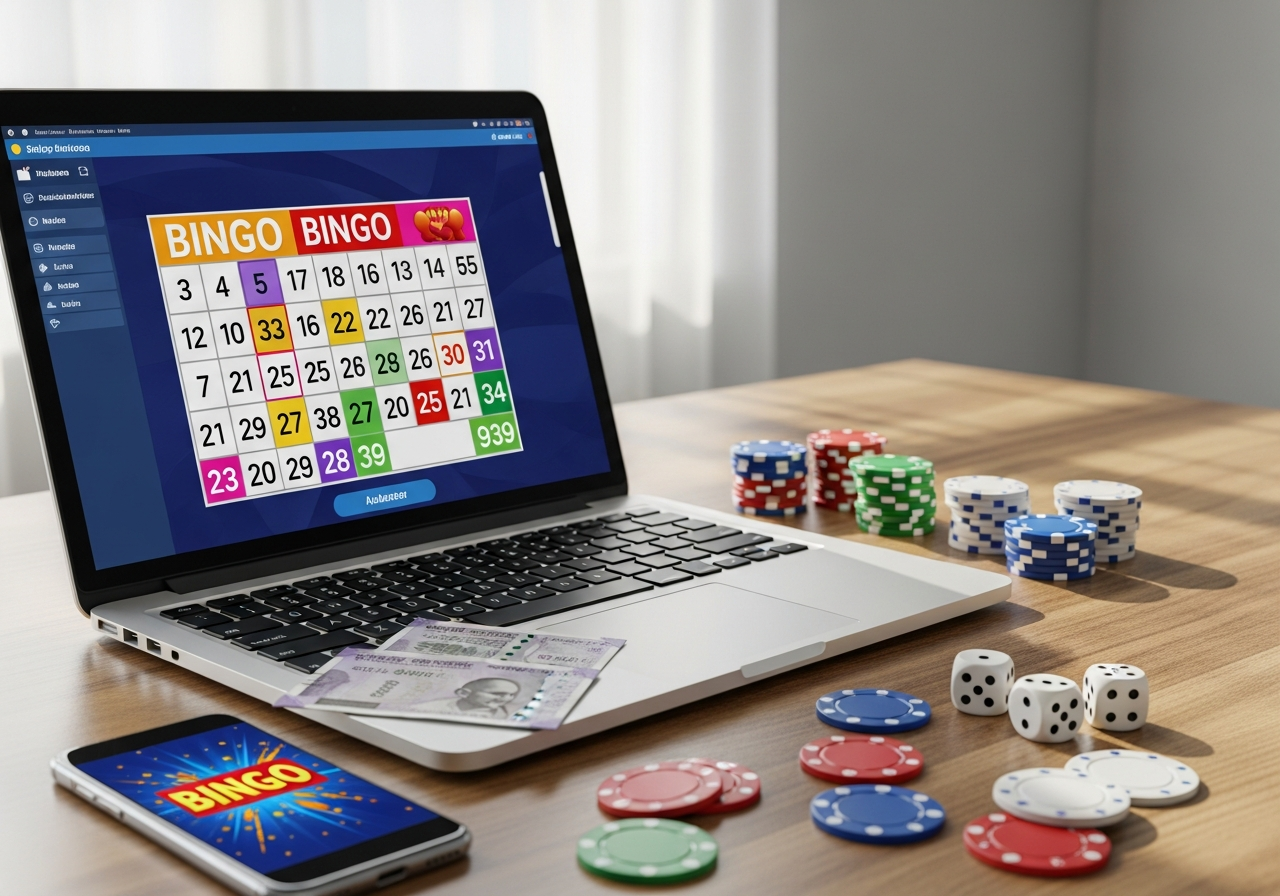
Online bingo for real money has grown in popularity worldwide, and India is no exception. But what exactly is online real money bingo, and is it legal where you live? Online bingo is a digital version of the classic lottery-style game where players purchase numbered cards, numbers are drawn randomly, and the first player to match a specific pattern wins a cash prize. The rules are simple and familiar to most people, yet the legal context in India is considerably more complex and evolving rapidly.
This guide covers everything an Indian player should know before playing online bingo for real money: the current legal landscape, how different game types work, step-by-step onboarding instructions, strategy tips, and critical responsible gaming practices. Whether you’re curious about classic pattern-based bingo rooms or modern skill-based timed competitions, this article will help you understand your options, assess the risks, and play safely if you choose to participate. Please note that this is informational content only and is not legal advice or encouragement to break any local laws. Always verify the rules in your specific state or region before playing.
Is It Legal To Play Online Bingo For Real Money In India?
The legal status of online real-money bingo in India is genuinely complicated and varies significantly by state. India’s primary gambling statute, the Public Gambling Act of 1867, grants individual states the power to regulate or prohibit gambling within their borders. Online bingo with real money stakes is typically classified as gambling because it involves randomly drawn numbers and monetary risk, even though some platforms market timed or skill-focused variants differently.
Several states have taken notably different approaches. Sikkim and Nagaland, for example, have explicit licensing frameworks for online gaming and skill-based contests, which means some operators in those jurisdictions legally offer real-money games. However, most Indian states have not created clear, permissive frameworks for online real-money bingo. More concerningly, the central government and many state authorities have actively moved to restrict or ban money-based online gaming in recent years. Enforcement has tightened around real-money gaming advertisements and app availability, with major app stores and payment processors increasingly blocking real-money gaming apps or restricting their promotion within India.
A critical disclaimer: this article is informational only and not legal advice. The laws governing online gambling and bingo in India continue to evolve, and enforcement varies by state and time. Before you spend any money, you must independently verify the current legal status in your state or region. Playing in a jurisdiction where real-money bingo is prohibited could expose you to legal penalties or financial loss through app takedowns or account freezes.
How Indian gambling and online gaming laws apply to bingo
Under Indian law, bingo is typically treated as gambling because it relies on random number draws (using RNG or random number generators) combined with monetary stakes. Players buy cards with money, and payouts are determined by chance—the draw itself is not something players control. This puts it squarely within the definition of gambling under the Public Gambling Act.
Several states have explicitly banned or severely restricted money-based online games in the last few years, issuing notices to app stores and payment providers. Some states are considering or have passed legislation that would classify most real-money online games as illegal unless specifically licensed. Because these rules change and vary, you must check your state’s current stance before playing. Search online for “[Your State] online gaming law” or contact a local legal advisor if you are uncertain.
Offshore bingo sites, skill-based apps and grey-area considerations
Many real-money bingo platforms accept Indian players despite not being licensed or regulated in India. These platforms are typically based offshore (in countries like Malta, Curacao, or the UK) and hold gaming licenses from their home jurisdiction. They rely on the fact that Indian law does not formally prohibit Indian residents from playing on foreign-licensed sites, only from operating unlicensed gambling businesses within India. However, this legal grey area carries risks: if regulations change, your account could be affected, withdrawals might be delayed or blocked, and you would have limited legal recourse.
Some bingo apps market themselves as skill-based rather than games of pure chance, positioning timed or head-to-head competitions where speed and accuracy determine the winner rather than luck alone. The theory is that skill-based games may fall outside the gambling definition in some states. However, interpretation varies widely by jurisdiction, and regulators may not agree that a timed bingo variant truly qualifies as skill-based. Proceed with caution if this is your reasoning, and always verify your state’s stance on skill-based gaming specifically.
Indian-based operators—those registered and operating within India—typically cannot legally promote or offer real-money bingo to Indian players without explicit state or central licensing. Any real-money bingo app or website targeting Indian players that does not clearly display a gaming license from a state like Sikkim or Nagaland, or from a reputable offshore regulator, should be treated with significant skepticism.
Understanding Online Bingo: Variants, Rules and Key Terms
Online bingo comes in several distinct flavors, each with different card layouts, winning patterns, and payout structures. Understanding these variants is essential because they determine how you play, what patterns you need to watch for, and how your skill or luck affects your chances of winning.
| Bingo variant | Card layout | Common patterns | How you win | Where you’ll see it online |
|---|---|---|---|---|
| 75-ball bingo | 5×5 grid (25 squares) | Single/double/triple lines, four corners, full house (coverall) | First player to complete the selected pattern | US-based platforms, many offshore rooms |
| 90-ball bingo | 3×9 grid (27 squares, numbers 1–90) | One line, two lines, full house | First player to achieve line(s) or full coverage | UK and European platforms, popular internationally |
| Speed bingo / Timed bingo | 5×5 grid or variable | Lines, patterns, or full house | Fastest accurate completion within fixed time limit | Skill-based cash bingo apps, tournament-style games |
| Head-to-head bingo | 5×5 grid (1v1 match) | Lines, patterns, or high-score daub count | Player with highest score or first valid pattern in timed round | Competitive skill-based bingo apps, esports-style platforms |
| Linked/progressive bingo | Classic 75 or 90-ball | Single/multiple lines, full house | First to pattern; prize pool grows across multiple rooms/sessions | Large lobbies, multiple rooms active simultaneously |
| Free-play bingo | Any of above | Any pattern | Free or small-stake play with optional real cash mode | Social bingo apps, freemium platforms |
The most traditional formats are 75-ball (popular in North America) and 90-ball (popular in the UK and Europe). In both, you purchase a card or cards, a number is called or displayed each turn, and you mark (or “daub”) any matching numbers on your card. The first player to complete the designated winning pattern—such as a full row, four corners, or the entire card (called a “full house” or “coverall”)—wins the prize pool. In modern skill-based timed bingo, players must complete their pattern or accumulate points within a fixed time window, and scoring may reward speed and accuracy with bonuses or multipliers.
Key terms you will encounter:
- Card: Your numbered grid (ticket) for the game.
- Daub/Mark: Highlighting a number on your card when it is called.
- Pattern: The configuration of numbers you need to mark to win (e.g., a line, corners, full house).
- RNG: Random Number Generator; software that ensures unbiased, unpredictable number draws.
- Lobby: The waiting area or menu showing available bingo rooms and their buy-in amounts, prize pools, and player counts.
- Jackpot: A larger prize often triggered by rare patterns or linked across multiple games.
- Ticket price: The cost to buy one card for a game (often ₹10–₹500+ depending on the room and platform).
- Buy-in: The total amount you spend to enter a game (single ticket or multiple tickets).
- Room: A single bingo game session with its own set of players, numbers, and prize pool.
How online real money bingo rounds actually play out
A typical real-money bingo session follows this sequence: You select a bingo room from the lobby, choose a ticket price that suits your bankroll, and purchase one or more cards. The game waits until a minimum number of players join or a scheduled start time arrives. Once the game begins, numbers are drawn sequentially (typically one every 5–10 seconds in classic bingo, or rapidly in timed variants). As each number is called, the platform automatically marks matches on your card (auto-daub), or you manually tap to mark them, depending on the app’s settings. You watch for your target pattern—a line, four corners, full house, or other configuration set by the room’s rules. When you complete the pattern, you press a “Bingo!” button to declare your win. The system verifies your card, and if valid, you are assigned a prize share. In many real-money platforms, multiple players may complete the winning pattern on the same draw, so the prize pool is split equally among them. Games typically last 5–30 minutes, depending on the variant and room.
Step‑By‑Step: How To Start Playing Online Bingo For Real Money From India
Before you spend any money, confirm that real-money bingo is legal in your state. Once you have verified legality, follow these steps to start playing safely:
- Verify legality in your state: Search online for your state’s current stance on real-money online gaming and bingo specifically. If you are unsure, consult a local legal professional or contact your state’s consumer affairs or gambling regulatory office.
- Research reputable platforms: Identify bingo apps or websites that accept Indian players and display transparent licensing information (ideally from Sikkim, Nagaland, Malta, Curacao, or UK regulators). Read user reviews on independent forums and check for any regulatory warnings or complaints.
- Download or access the platform: Install the app from a reputable app store or visit the website directly. Verify the URL and app publisher to avoid phishing or fake clones.
- Create a strong account: Use a unique, complex password (mix uppercase, lowercase, numbers, symbols) that you do not use elsewhere. Do not share your login details.
- Complete KYC (Know Your Customer) verification: Provide your full name, date of birth, phone number, email, and address. You will likely need to upload an ID copy (Aadhaar, passport, or driver’s license) and address proof. This step is mandatory for withdrawals and anti-money laundering compliance.
- Choose a payment method: Select a deposit method supported by the platform and available in India (debit card, credit card, net banking, e-wallets). Ensure the payment gateway is secure (look for HTTPS and trusted logos). Start with a small deposit.
- Play free or demo games first: Many platforms offer free-play rooms or no-deposit bonus bingo where you can learn the interface, card layout, and calling speed without risking money.
- Select a low-stakes room: Choose a bingo room with a ticket price you can afford to lose comfortably (e.g., ₹10–₹50 for beginners). Avoid high-stakes rooms until you are confident.
- Set a loss limit: Decide before you play how much money you are willing to lose in that session and stick to it. Do not chase losses by increasing stakes.
- Play mindfully and withdraw winnings: Use the session to practice pattern recognition, card scanning, and daub timing. If you win, consider withdrawing a portion to a secure account rather than redepositing.
Creating an account, verifying KYC and choosing payment methods
When you sign up for a bingo platform, you will be asked to provide basic personal information: full name, email, phone, date of birth, and residential address. This information is used to create your account and is required for KYC compliance, especially before you can withdraw winnings. KYC protections exist to prevent fraud, money laundering, and unauthorized account access.
To complete KYC, you will be asked to upload identity documents. Accepted documents typically include Aadhaar, passport, PAN card, or driver’s license. You may also need to provide proof of address (utility bill, rental agreement, bank statement). Keep these documents clear and legible; poorly scanned copies may be rejected, delaying your withdrawal.
Payment options for Indian players typically include debit cards, credit cards, net banking, and e-wallets (Paytm, PhonePe, Google Pay, etc.). Always use a payment method linked to your personal account, never borrow or use someone else’s card. Check the platform’s payment partners to ensure they are legitimate and that any fees (deposit charges, currency conversion) are transparent. Use only HTTPS-secured payment pages and never enter sensitive details on unsecured or public WiFi.
Deposits, withdrawals and managing your first real money session
Most platforms have a minimum deposit of ₹100–₹500 and a maximum daily or monthly deposit limit. Check the platform’s deposit policy before committing. Processing is usually instant for cards and e-wallets, though some net banking transfers may take 1–2 hours.
Withdrawals typically have a minimum amount (₹200–₹500) and may be subject to processing fees or delays of 2–7 business days. Some platforms impose weekly or monthly withdrawal caps. Crucially, many platforms require you to wager a multiple of your deposit before you can withdraw (e.g., deposit ₹1,000, wager ₹2,000, then withdraw). This is standard, but you must understand the terms to avoid being locked into playing longer than intended.
For your first session, start with a small deposit (₹500–₹1,000) and commit to a single session. Set a loss limit before you begin (e.g., “I will not lose more than ₹300 today”). Stick to that limit—if you reach it, stop playing. Keep your first ticket prices low (₹10–₹25) to stretch your bankroll and gain experience without rapid losses.
Some platforms offer no-deposit free bingo or welcome bonuses that include free play credits that can still result in real cash wins. These are excellent for new players because they allow you to learn the game and test the platform with minimal financial risk. Always read the bonus terms to understand any wagering requirements or cash-out limits.
Types of Real Money Bingo Platforms Available to Indian Players
Real-money bingo platforms targeting Indian players fall into several categories, each with distinct game structures, prize frequencies, and risk profiles. Understanding these will help you choose a platform that matches your playing style and risk tolerance.
| Platform type | Examples (generic) | How games work | Skill vs chance focus | Typical pros | Typical cons |
|---|---|---|---|---|---|
| Classic online bingo rooms | Offshore bingo sites with multiple lobbies | Players buy cards, wait for full lobby, numbers drawn, first pattern wins | Primarily chance-based (RNG) | Large jackpots, social chat, variety of rooms | Slow games, large player pools, harder to win |
| Skill-based head-to-head bingo | Competitive bingo apps, timed 1v1 apps | Two players compete; fixed time limit (e.g., 2 min); highest score or first valid pattern wins | Primarily skill-based (speed, accuracy) | Quick games, frequent small wins, competitive feel | Smaller prize pools, requires quick reflexes, higher variance |
| Tournament/bracket bingo | Multi-round bingo tournaments, playoff-style apps | Players compete in brackets or tiers; winners advance; cumulative scoring | Mixed (chance in draw, skill in accuracy/speed) | Engaging format, tiered prizes, leaderboards | Complex rules, longer time commitment, potential for chasing |
| Multi-game platforms | Real-money gaming hubs (cards, scratch, bingo, etc.) | Bingo is one of several game types; games run in scheduled rooms or on-demand | Varies by game (bingo is chance; scratch/cards have skill options) | Variety, one account for multiple games, integrated bonuses | Bingo may be secondary focus, fragmented player pool |
| Free-play sites with optional real-money mode | Social bingo apps, freemium platforms | Free games (no real stakes) plus optional real-money rooms | Primarily chance-based (RNG) | Low-pressure learning, social features, free entertainment | Real-money rooms often sparse player pools, lower prize pools |
Each platform type serves different player profiles. Classic bingo rooms work best for players who enjoy slower-paced games, social chat, and the possibility of very large jackpots. Skill-based head-to-head bingo suits players who want quick matches, frequent small wins, and the satisfaction of outperforming an opponent through speed and accuracy. Tournament apps appeal to players who like structured progression and competitive leaderboards. Multi-game platforms are ideal for players who like variety and want one account for multiple game types.
How skill-based bingo apps differ from traditional online bingo rooms
Traditional online bingo rooms typically operate on a classic model: players join a lobby, select a room with a specified ticket price, buy one or more cards, and wait (sometimes 5–15 minutes) for a room to fill with enough players to begin. The game then proceeds at a standard pace—one number called every 5–15 seconds—until someone achieves the winning pattern. Prizes are pooled from all tickets sold and distributed to winners.
Skill-based bingo apps, by contrast, typically use a head-to-head or small tournament format with fixed-duration rounds (often 60–120 seconds). Instead of waiting for a random draw pattern to be completed, players compete based on speed and accuracy: scoring points for “perfect,” “correct,” or “good” daubs within the time window, with bonuses for rapid daubs or achieving multiple patterns. The player with the highest score at the end of the round wins. Games are designed to be quick (often 2–5 minutes per match including matchmaking), creating more frequent play and smaller prize pools per game but more numerous winning opportunities. These apps often include power-ups (temporary boosts like extra time or double points) that players can earn or purchase, adding a layer of strategic decision-making absent from classic bingo.
Game Rules, Patterns and Scoring in Online Bingo
Online bingo rules are straightforward but vary by game type. Understanding the core mechanics and the specific rules of your chosen platform is essential to avoid costly mistakes or missed winning opportunities.
- Card mechanics: Each card is a grid of numbered squares (75-ball uses a 5×5 grid; 90-ball uses 3×9). Numbers are unique per card within a game, but the exact layout differs from player to player, ensuring no two players have identical cards.
- Number draws and RNG: Numbers are drawn using Random Number Generators (RNG) in online platforms, ensuring fairness and unpredictability. In classic bingo, numbers are drawn sequentially until someone wins. In timed or skill-based bingo, numbers may be drawn more rapidly or continuously for a fixed duration.
- Manual vs. auto-daub: Most platforms offer auto-daub (the system marks numbers for you instantly) and manual daub (you tap each number). Auto-daub is faster for beginners; manual daub is preferred by some experienced players who want full control.
- Multiple winners and prize splitting: If multiple players achieve the winning pattern on the same call, they share the prize pool equally. This is a common scenario in large-lobby games and is important to understand because your win may be smaller than advertised if many players win simultaneously.
- RNG compliance: Licensed platforms typically have their RNG systems tested and certified by independent auditors (e.g., GLI, TST). Before playing, check if the platform publishes fairness certifications or RNG test results.
- Card selection and optimization: In fixed-pattern games (e.g., “one line”), some platforms allow you to choose your card layout or buy multiple cards. While card choice does not affect odds mathematically, some players prefer cards with numbers distributed in ways they find easier to scan quickly.
- Mis-action penalties: In skill-based timed variants, declaring a false “bingo” (pressing the win button when your pattern is incomplete) usually results in a penalty, such as a score reduction or immediate loss.
Popular winning patterns and how payouts usually work
Common winning patterns in 75-ball bingo include:
- Single line: One horizontal, vertical, or diagonal line of five marked numbers. Typically the lowest payout.
- Double line: Two horizontal or vertical lines; a mid-tier payout.
- Four corners: The four corner squares of the grid; often pays less than a line because it is considered easier.
- Full house (coverall): All 25 squares marked; the highest payout in a single-game scenario.
- Postage stamp: A 2×2 corner block; common in some platforms.
In 90-ball bingo, patterns are simpler: first prize for one full line, second prize for two lines, third prize for full house. Some linked games (where multiple rooms are connected) have escalating jackpots that grow across many games and can be huge if the rare pattern (e.g., full house in under 40 balls) is achieved.
Payouts are determined by the prize pool generated from that game’s ticket sales. If a room sold 50 tickets at ₹20 each, the total pool is ₹1,000. If one player wins, they take ₹1,000 (or the house takes a small percentage—typically 2–10%—and the player gets ₹900–₹980). The paytable (the schedule showing what each pattern pays) should be visible before you buy a card. Always review the paytable and odds for your chosen room before playing, as different rooms may have different prize structures and house percentages.
Timed and score-based bingo: perfect, correct and good daubs
In skill-based timed bingo, every daub is scored based on timing and accuracy:
- Perfect daub: Marked within the first few hundred milliseconds of the number being drawn; worth the full or maximum points.
- Correct daub: Marked after the perfect window but before a set time limit (e.g., 2 seconds); worth 80–90% of full points.
- Good daub: Marked within a longer window (e.g., 5 seconds); worth 50–70% of points.
- Late/missed daub: Marked after the time window or not at all; worth zero points.
Completing a pattern (e.g., a line) within the timed round may grant a bonus (e.g., 100 extra points) or a multiplier (e.g., double your current score). Speed and accuracy are rewarded, making focus and reaction time genuine factors in your score.
False declarations—pressing “bingo” when your pattern is not actually complete—typically result in a penalty (e.g., –50 points or immediate game loss), so never rush to declare unless you are certain. Accuracy is as important as speed in these games.
Step‑By‑Step: How To Start Playing Online Bingo For Real Money From India
(This section heading is repeated from an earlier section; the following content covers Beginner Strategy and bankroll management in detail.)
Beginner Strategy: Smart Bankroll and Room Selection
Managing your money wisely is the most critical factor in sustaining enjoyment and minimizing harm when playing real-money bingo. Bankroll management is not about winning more; it is about losing less and ensuring you can play responsibly over time.
| Decision | What to consider | Risk level | Recommended for | Example in bingo context |
|---|---|---|---|---|
| Budget size | How much can you afford to lose monthly without affecting bills, savings, or dependents? | Low (safe) to high (reckless) | All players | Beginners: ₹500–₹2,000/month; experienced: ₹2,000–₹10,000/month |
| Ticket price | How much per card? Balance frequent small stakes vs. rare large wins. | Low (₹10–₹50) to high (₹200+) | Conservative players start low | ₹10–₹25/ticket for ₹1,000 monthly budget; ₹50–₹100 for ₹5,000 budget |
| Cards per game | Do you play 1 card or multiple? More cards increase cost and odds of winning but deplete bankroll faster. | Low (1–2 cards) to high (5+ cards) | Beginners: 1–2 cards; experienced: 2–4 cards | 1 card at ₹20 = ₹20 per game; 3 cards = ₹60 per game; choose based on budget |
| Room size/traffic | Larger lobbies offer bigger jackpots but lower win probability; smaller rooms are tighter and win more often. | High traffic = lower individual win odds | Players seeking frequent small wins: small rooms; players chasing big payouts: large lobbies | Room with 5 players: your card is 20% of pool; room with 100 players: your card is 1% of pool |
| Play timing | When do you play? Quiet hours = fewer players = better odds; peak hours = more players = larger pools but lower probability. | Depends on player preference | Casual players who like good odds: play off-peak (early morning, weekday mornings) | Tuesday 10 AM: 10 players, ₹200 pool; Friday 8 PM: 500 players, ₹10,000 pool |
| Session duration | How long do you play per session? Longer sessions = more games = higher total loss potential. | Longer = higher risk | Beginners: 30 min; intermediate: 1 hour; experienced: 1–2 hours | Budget ₹500, ₹20/ticket, 30 min session = ~6–8 games |
A simple bankroll framework is the 1–3% rule: allocate a monthly or weekly budget (e.g., ₹1,000), and never spend more than 3% of that on a single game (₹30). This ensures you can weather losses and play multiple games. For instance, if your monthly bingo budget is ₹1,000, play games with ticket prices of ₹10–₹30 per card. Starting with 1–2 cards per game allows you to span 20–50 games before your budget is exhausted, giving you many chances to learn and improve.
Avoid rooms where the prize-pool-to-ticket ratio is poor. If a room charges ₹100 per ticket but the total prize pool (across all tickets) is only ₹800 (implying 8 tickets sold), the expected return is 80%, meaning you lose money on average. Prefer rooms where the pool seems proportional to the number of tickets sold, or where the house advertises a high payout rate (e.g., “97% return to player”).
Managing your bingo budget like a pro
Translate these principles into daily practice:
- Set a monthly budget: Decide how much you can afford to spend on bingo across the whole month without harming savings or essentials. Be honest and realistic.
- Divide into weekly or daily amounts: Split your monthly budget into weekly or daily limits (e.g., ₹1,000/month = ₹250/week = ₹50/day). Do not exceed your daily limit, even if you are “hot” or tempted by a high-prize room.
- Cap tickets per session: Decide the maximum number of games per session and stick to it. For example, “I will play 10 games maximum per session, ₹20/ticket,” ensuring a loss limit of ₹200 per session.
- Never increase stakes after losses: If you lose your session limit, stop. Do not think, “I’ll play ₹50 tickets to win back the ₹200.” This is chasing losses and is how players deplete their entire budget rapidly. Stick to your original plan.
- Track winnings separately: If you win, do not immediately reinvest the winnings. Withdraw a portion to a separate account or physical cash, or reduce your next session’s spending to account for the win.
- Set a stop time: Decide before you start how long you will play (e.g., “30 minutes”) and stop when time is up, regardless of whether you are winning or losing.
Rooms with better odds are those with smaller player counts and lower ticket prices relative to the prize pool. Avoid high-stakes “race to riches” rooms where one large jackpot attracts hundreds of players; your odds of winning are very low, and if you do win, it is likely shared among multiple winners.
Advanced Tips To Improve Your Chances In Real Money Bingo
While bingo is fundamentally a game of chance, player behavior and platform choice do matter. Here are evidence-backed tactics to maximize your results:
- Daub quickly and accurately: Practice rapid, accurate daub recognition. Missing a called number means missing a potential win, and mis-daubs slow you down. Use auto-daub if you are not confident in manual speed.
- Stay focused and minimize distractions: Mute notifications, play in a quiet space, and use headphones or amplified volume to ensure you do not miss number calls. Missed calls are easy mistakes to make.
- Choose auto-daub over manual for speed-based games: In timed skill-based variants, auto-daub is faster and more reliable than manual marking. Reserve manual daub for relaxed classic games where speed is not the primary score factor.
- Avoid unnecessary “bingo” declarations: Only press the win button when you are absolutely certain your pattern is complete. False declarations in skill-based games result in penalties and wasted time.
- Track which room types and times you win most often: After 20–30 games, identify patterns in your results. Do you win more in 1v1 head-to-head games or large lobbies? Off-peak or peak times? Adjust your strategy to play more in favorable conditions.
- Build power-up reserves strategically: In apps with power-ups, avoid wasting them on games you are unlikely to win. Save powerful multipliers or time-boost power-ups for moments when you are close to a high-value pattern or when the prize pool is notably large.
- Select low-traffic rooms if you prioritize win frequency: If your goal is to build confidence and win frequently (even if prizes are small), prefer rooms with 5–20 players rather than 500+. You will win less money per game but more often.
Making the most of power-ups and bonuses
Power-ups are temporary boosts available in many skill-based and modern bingo apps. Common types include:
- Extra time: Extends the round duration by a few seconds, giving you more opportunities to daub.
- Wild daubs: A marked number counts as matching any number briefly, boosting your score.
- Free rows/lines: Automatically completes one row or line without daubs, jumpstarting your pattern progress.
- Double or triple points: Multiplies your earned points for a set duration.
- Speed boost: Increases daub point value for rapid marking.
Power-ups are typically earned by winning games, completing daily tasks, or purchased with in-game currency or real money. Use them strategically: reserve the most powerful (e.g., triple points) for games with above-average prize pools or when you are one bingo away from a major win. Avoid hoarding power-ups; if the app limits your storage, unused power-ups expire, so do not waste them.
Some games allow you to stack power-ups (activate multiple simultaneously), which can be powerful. For example, activating “double points” and “speed boost” at the same time in a game with high multiplier bonuses can significantly boost your score and prize chances.
Speed, accuracy and pattern awareness
In classic bingo, speed matters less because you are waiting for a full pattern to be completed by any player. But in skill-based variants, speed and accuracy directly impact your score.
Develop a scanning routine: quickly identify which numbers on your card match the called numbers, mark them, and visually track your closest pattern (e.g., “I need 2 more numbers in that row to bingo”). Avoid focusing too hard on one pattern; keep your eye on multiple possible wins so you do not miss a faster completion elsewhere on your card.
In points-based scoring, maximizing your score often matters more than achieving a single bingo first. For instance, if you can complete two lines quickly versus one full house slowly, two lines might score higher and earn you a larger prize. Understand your game’s scoring rules and optimize for total points, not just pattern speed.
Advanced Tips To Improve Your Chances In Real Money Bingo
(Note: The above section is intentionally repeated here as a placeholder for additional content based on the JSON structure.)
Bonuses, Promotions and Free Bingo Options
Real-money bingo platforms use bonuses and promotions to attract new players and retain existing ones. Common offers include welcome bonuses, no-deposit free games, reload bonuses, daily free rooms, and loyalty rewards. Understanding these offers is crucial because they can stretch your bankroll or trap you into over-spending.
| Offer type | What it gives you | Key conditions | Ideal for which players | Typical pitfalls |
|---|---|---|---|---|
| Welcome/sign-up bonus | Deposit match (e.g., 100% up to ₹5,000) or flat bonus (₹500 free credit) | Wagering requirement (e.g., wager 5x bonus before withdrawing), time limit (e.g., 7 days), eligible games restrictions | New players looking to extend bankroll | Betting more to clear wagering; losing bonus credit due to time expiry |
| No-deposit free bingo | ₹100–₹500 free credit to play bingo without depositing | May have strict withdrawal caps (e.g., max ₹500 withdrawable), can only be used in specific rooms, loses after 24 hours | Cautious players testing the platform; budget-conscious players | Winnings capped too low to be meaningful; rules unclear on use |
| Reload bonus | Bonus on subsequent deposits (e.g., 50% match on 2nd deposit) | Wagering requirement, time-limited, may require a promo code | Regular players looking to recoup losses or fund new sessions | Players depositing more than planned to hit higher bonus thresholds |
| Daily/weekly free room | Scheduled free bingo session where real cash prizes are won without stake | Time-limited (e.g., 1–2 hour window), may be small prize pools, high player count | All players, especially those seeking risk-free play | Missing the scheduled time; over-relying on free plays, which are infrequent |
| Loyalty/VIP rewards | Points for every ₹1 wagered; points redeemable for cash, free tickets, or power-ups | Redemption rates vary widely (e.g., 100 points = ₹1), high-tier benefits require significant wagering | Regular, committed players who wager consistently | Over-playing to accumulate points, losing focus on bankroll limits |
| Cashback offers | Partial refund (e.g., 10% cashback) on losses within a period | Often capped (e.g., max ₹1,000 cashback), requires reaching a minimum loss amount, subject to terms | Players expecting to lose some money; mid-tier regular players | Being tempted to spend more to reach minimum cashback threshold |
| Referral bonuses | Bonus for inviting friends (e.g., ₹200 for each friend that deposits) | Friend must deposit and wager; referrer and friend both get bonuses | Social players with gaming friends | Inviting friends responsibly; ensure they understand the risks |
Bonuses are marketing tools, not free money. Every bonus comes with strings—wagering requirements, time limits, game restrictions, and withdrawal caps. Before claiming a bonus, calculate whether the wagering requirement makes sense for your play style. For example, a ₹500 bonus with a 5x wagering requirement means you must wager ₹2,500 before withdrawing; if your session budget is ₹500/week, meeting this requirement over 5 weeks might make sense, but it also extends your play and spending.
Free-play modes and no-deposit bonuses are valuable for risk-averse players because they allow you to learn the platform and game mechanics with real cash prizes on the line but without your money at risk. However, free-play rooms often have small prize pools and high player counts, reducing win probability. Use them to gain experience, not as a primary income source.
How to evaluate bingo bonuses safely
When you see a bonus offer, ask yourself:
- What is the wagering requirement? Divide the bonus by the requirement to calculate the minimum you must spend to clear it. If the ratio is unfavorable (e.g., ₹500 bonus with 10x requirement = ₹5,000 wagering), skip it.
- What games count toward wagering? Some bonuses apply only to bingo; others apply to multiple games. Verify that your preferred game counts at 100% (some games count at 25–50%, making wagering harder).
- What are the withdrawal caps? Some bonuses cap your total withdrawable winnings (e.g., ₹2,000 max from a ₹5,000 bonus). If you win ₹3,000 with the bonus, you can only withdraw ₹2,000.
- What is the time limit? Bonuses often expire within 7–30 days. Ensure you have time to meet wagering requirements before expiry.
- Is it worth your time? Calculate the expected value. A ₹500 bonus with 5x wagering (₹2,500 required) and 100% game contribution might be worth pursuing if you plan to play that amount anyway. But a bonus with unfavorable terms is marketing noise—ignore it and stick to your bankroll plan.
Never over-deposit to unlock a bonus. If your budget is ₹2,000 but a bonus requires a ₹5,000 deposit, skip the bonus. Chasing bonuses is a path to overspending and losses.
Fairness, RNG and Safe Play Practices
A legitimate, fair real-money bingo platform uses a certified Random Number Generator (RNG) to ensure that number draws are truly unpredictable and unbiased. Licensed platforms (from jurisdictions like Malta, Curacao, UK, Sikkim, or Nagaland) are required to have their RNG tested by independent auditors such as GLI (Gaming Laboratories International) or TST (Technical Systems Testing). You should check the platform’s website for published RNG certifications or fairness reports.
Beyond RNG, safe play involves verifying the platform’s licensing, security measures, payment processing, withdrawal policies, and your own self-control. Using the tools and practices below significantly reduces your risk of fraud, theft, or problem gambling.
- Verify licensing and regulation: Check if the platform displays a gaming license from a recognized regulator (Curacao, Malta, UK, Sikkim, Nagaland). Visit the regulator’s website to confirm the license is current and valid. If the platform makes no mention of licensing, treat it as a high-risk offshore operation.
- Use secure payments: Only enter payment information on HTTPS-encrypted pages (look for the padlock icon in your browser). Avoid payment links sent via email or SMS; visit the platform directly instead.
- Ensure KYC is enforced: Platforms requiring full Know Your Customer verification (ID upload, address proof) are more trustworthy than those that do not. KYC reduces fraud and money laundering.
- Check withdrawal clarity: Before you play, read the withdrawal policy. Ensure minimum amounts, processing times, and fees are clearly stated. If the policy is vague or promises unrealistic turnaround (e.g., “instant”), be skeptical.
- Use deposit and loss limits: Most platforms allow you to set daily, weekly, or monthly deposit limits and loss limits (maximum losses per period). Use these tools actively. If the platform does not offer limits, consider playing elsewhere.
- Enable self-exclusion if needed: If you feel your play is becoming compulsive, use the platform’s self-exclusion feature to lock your account for a set period (days to months). This is a critical safety net.
Reading terms, limits and self-exclusion tools
Before signing up or depositing, thoroughly read the platform’s Terms and Conditions and Responsible Gaming Policy. Key items to scan include:
- Deposit limits: Maximum per day, week, or month. Set a personal limit lower than the platform’s maximum to ensure self-discipline.
- Loss limits: Some platforms allow you to cap losses per period. Use this feature.
- Session time limits: Auto-log-off after inactivity or a set duration to prevent extended sessions.
- Withdrawal limits and fees: Minimum withdrawal amounts, processing times (usually 2–7 days), and any fees charged.
- Dispute procedures: How you can lodge a complaint if something goes wrong. Reputable platforms have clear, accessible dispute channels.
- Self-exclusion and cool-off: Look for a “Self-Exclusion” option in your account settings. Activating it should freeze your account for a set period, preventing login and play.
If the platform does not offer these tools or makes them hard to find, it is a red flag indicating poor responsible gambling practices.
Risk management in a legally uncertain environment
For Indian players, there is an additional layer of risk: regulatory uncertainty. Laws governing real-money gaming are evolving, and enforcement is inconsistent. Here are practical steps to manage this risk:
- Avoid large account balances: If you have ₹10,000 in winnings on a platform and regulations change, you may face delays or complications withdrawing. Withdraw regularly rather than accumulating balances.
- Diversify platforms cautiously: Do not place all your money on one platform. If it is suddenly banned or your account is frozen, you lose everything. However, managing multiple accounts also increases complexity and risk of over-playing.
- Choose platforms that communicate transparently: If a platform clearly explains its licensing jurisdiction and regulatory status, and proactively communicates with Indian players about legal changes, it is more trustworthy.
- Monitor regulatory news: Stay informed about changes to your state’s online gaming laws. If a ban is announced, stop playing and withdraw funds immediately.
- Keep documentation: Save records of your deposits, withdrawals, and winnings. If a dispute arises, evidence will support your claim.
When You Should Not Play: Legal And Personal Red‑Flag Scenarios
Real-money bingo is entertainment, not an income stream or investment. There are clear situations where you should not play:
- You are underage (below 18): Age restrictions exist to protect minors from gambling harm. If you are under 18, you are not legally permitted to play, and platforms that accept underage players are operating illegally.
- Real-money bingo is banned in your state: If your state law explicitly prohibits real-money online games or bingo, playing violates the law regardless of whether offshore platforms accept you. Legal consequences could include fines or penalties. Stick to free-play bingo instead.
- You are using borrowed money or credit: Never borrow money to play bingo. If you cannot afford to lose it, you cannot afford to play. Borrowing to gamble leads to debt spirals and financial ruin.
- You are experiencing a financial crisis: If you are struggling with bills, rent, or debt, any money spent on bingo is money you do not have. Avoid playing entirely until your situation stabilizes.
- Bingo is harming your mental health: If playing causes anxiety, shame, regret, or obsessive thinking, it is time to stop. Problem gambling is a genuine mental health condition, and no prize is worth your well-being.
- You are chasing losses: If you are playing specifically to “win back” money you lost, you are in a dangerous mindset. Chasing losses is the primary driver of severe gambling harm. If you notice this pattern, stop immediately and seek help.
- Your family or partner is concerned: If loved ones are expressing worry about your play, listen to them. Their outside perspective is valuable, and ignoring their concerns often leads to escalating harm.
If any of these apply to you, real-money bingo is not appropriate. Prioritize your legal status, financial security, and mental health first.
Safer alternatives for Indian players
If you enjoy bingo but are concerned about legality, affordability, or personal control, consider these alternatives:
- Free-play social bingo: Many bingo apps offer free, non-monetary bingo games with social features (leaderboards, chat, tournaments). These retain the fun and social aspects without gambling risk. Examples include free versions of bingo apps that also offer real-money modes.
- Weekly bingo halls and community events: Some communities organize free or low-cost in-person bingo events for charity or social purposes. These are legal, social, and low-stakes.
- Skill-based game platforms with clearer legal standing: Some games (e.g., fantasy sports, esports prediction, card games of pure skill) may have clearer legal standing in certain states. Verify your state’s rules before playing.
- Casual games and mobile gaming: Free-to-play mobile games with optional cosmetic purchases offer entertainment without gambling risk.
- Other forms of entertainment: If money is tight or you are concerned about gambling, allocate entertainment budget to movies, books, sports, or hobbies instead.
Real-money bingo can be enjoyable if you play responsibly within the law and your means. But if any factor—legality, finances, or mental health—is uncertain or concerning, free bingo or non-gambling alternatives are the safer choice.
Conclusion
Playing online bingo for real money in India requires careful attention to three critical factors: legality, responsibility, and platform safety. India’s gambling laws are complex and state-specific, with several states moving toward stricter restrictions on real-money online gaming. Before spending a single rupee, verify that real-money bingo is legal in your state. If it is banned or you are unsure, stick to free bingo or other alternatives.
If you decide to play, choose a licensed, reputable platform; use strong security practices; set firm bankroll limits; and treat bingo as entertainment with money you can afford to lose, not as income or a way to recover losses. Learn the game mechanics—whether classic pattern-based bingo or modern skill-based variants—and play with focus and discipline.
Bonuses are tempting but come with conditions; free-play modes are valuable for learning without risk; and responsible gaming tools (limits, self-exclusion) are your allies in avoiding harm.
Bingo is fundamentally a game of chance, and the odds favor the house over time. Your goal should be enjoyment and safe play, not profit. If at any point real-money bingo threatens your finances, legal standing, or mental health, stop playing and seek help. Resources like the National Council for Mental Health in India (NCMH) and Gamblers Anonymous offer support for problem gambling.
Play wisely, play legally, and play responsibly.